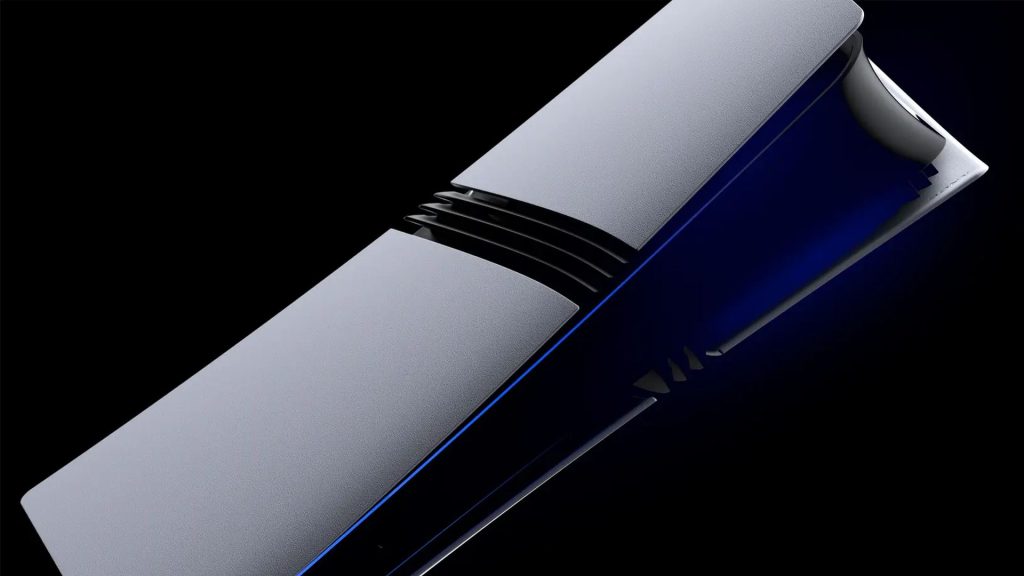

Sony’s bombshell decision to cease PlayStation disc production by January 2028 has landed like a lead weight on the gaming community—and analysts aren’t mincing words about the fallout. While most observers agree that Sony is unlikely to reverse course, the consensus is that the move will inflict real damage on the industry’s broader value proposition. According to a CNBC report citing analytics firm Dataintelo, the global second-hand games market alone was valued at roughly $7.2 billion last year. Eliminate new physical discs, and that secondary market effectively evaporates for current-gen titles.
And here’s the kicker: that market isn’t shrinking—it’s growing. Dataintelo projects the pre-owned games sector will expand at a 7.5% compound annual rate from 2026 to 2034, eventually hitting a staggering $13.8 billion. The firm notes that this demand is largely driven by affordability concerns, especially as both hardware and software prices continue their steady climb. “In 2025, more than 38% of all video game transactions in the United States alone involved a pre-owned or used title,” the firm stated, “reflecting deep structural demand for the secondary gaming economy.”
Michael Pachter, managing director of strategic planning at Wedbush Securities, framed it bluntly: “There can be no question that the consumer pays the tax in terms of less optionality.” He acknowledged that Sony saves money on disc production costs, but argued that the trade-off is a net loss for players. Meanwhile, Morningstar’s director of equity research, Kazunori Ito, pointed out the bitter irony: Sony previously championed the used game market during the PS4 announcement, making this reversal “a truly ironic turn of events.”
F-Squared founder Michael Fuffter didn’t pull any punches either, calling the decision “an extremely anti-consumer move” that “has no legitimate justification and communicates a disdain for players in their ecosystem.” He also took aim at the PC comparison that Sony is likely to lean on, noting that consoles are closed systems—unlike PCs, where physical media has already largely died out. “Sony would love for us to believe that the PC market’s shift to digital is the exact same thing as consoles going down that path,” he said. “It simply isn’t.”
Dataintelo’s figures arrive against a backdrop of flagging physical sales performance. Circana’s Mat Piscatella recently pointed out that only two games sold more than 10,000 physical copies in the US during the entire week ending July 11th—and year-to-date, only seven games have crossed the 100,000 physical-unit mark. That suggests physical is already on life support, but analysts argue that doesn’t justify pulling the plug entirely.
Dr. Serkan Toto, CEO of Kantan Games, believes Sony is simply waiting for the “storm” of player discontent to pass. Niko Partners’ Daniel Ahmad echoed the sentiment, suggesting that while Sony won’t reverse its decision, it will likely offer more details in the coming months to soften the blow.
Retailers, unsurprisingly, are among the loudest critics. The UK’s Entertainment Retailers Association (ERA) issued a blistering statement, with CEO Kim Bayley calling the decision “a triumph of corporate convenience over consumer choice” that would harm retailers and gamers alike.
For its part, Sony has stuck to its official line: the move is meant to align the company with modern consumer trends. But when the trends you’re aligning with kill a $7 billion secondary market, take away consumer ownership options, and lock players even tighter into a single digital storefront, it’s hard to call that anything other than a power play dressed up in market-research clothing.
We’ll be watching closely as the story develops—because if there’s one thing this industry loves, it’s a good fight over the future of ownership. And right now, the players are losing.
Related posts:
 Halo: Campaign Evolved Release Times Confirmed – But Don’t Expect Pre-Loads
 Bethesda Montreal Layoffs Draw Union Fury Over “Bare Minimum” Severance and Immediate Healthcare Loss
 Phoenix Cyclops Burns Bright as Marvel Tōkon: Fighting Souls’ First Year 1 DLC Fighter, Out Fall 2026
 Gears of War: E-Day Multiplayer Reveal Locked In for July 30 – Here’s What We Know
 The Duskbloods Closed Network Test Applications Are Live – Here’s How to Get In
 Xbox Finally Brings OG Backward Compatibility to PC – BLiNX, Conker, and More Lead the Charge
 Steam Rolls Out New Gifting Features, Including Guest Checkout and Cross-Region Gifts
 Runescape: Dragonwilds Smashes Expectations With 1.3 Million Early Access Sales – And It’s Not Slowing Down