
Despite 2025 delivering no shortage of critical darlings and blockbuster hits, DOOM: The Dark Ages emerged as the year’s biggest triple-A anomaly. It crossed three million players and averaged a significantly larger launch than DOOM Eternal—yet with far less buzz. And not just because of the tepid but still positive critical reception. Say what you will about the weaker elements—some of the larger levels that leaned awkwardly toward semi-open world design, or the divisive weapon selection—id Software’s more grounded, defensive gameplay drew as much ire as it did support.
So you’d think Revelations is an attempt to correct that—to bring back some of the aerial acrobatics that Eternal fans loved without sacrificing the defensiveness that defined The Dark Ages. The result is an expansion that finds a genuine balance, delivering the carnage befitting the Slayer while providing those frantic, possibility-filled moments. In many ways, it’s a fitting send-off to a trilogy that began in 2016, offering some much-needed closure while still leaving room for future entries.
A Story That Circles Back
In the aftermath of The Dark Ages—with the Slayer securing his freedom—Revelations answers a few questions about the character’s past. If you’re not up to speed on Eternal and the events that led to the fall of the Sentinels, some elements will doubtless go over your head. Nevertheless, it’s satisfying to finally get clarity on key events, even if several remain open to interpretation.
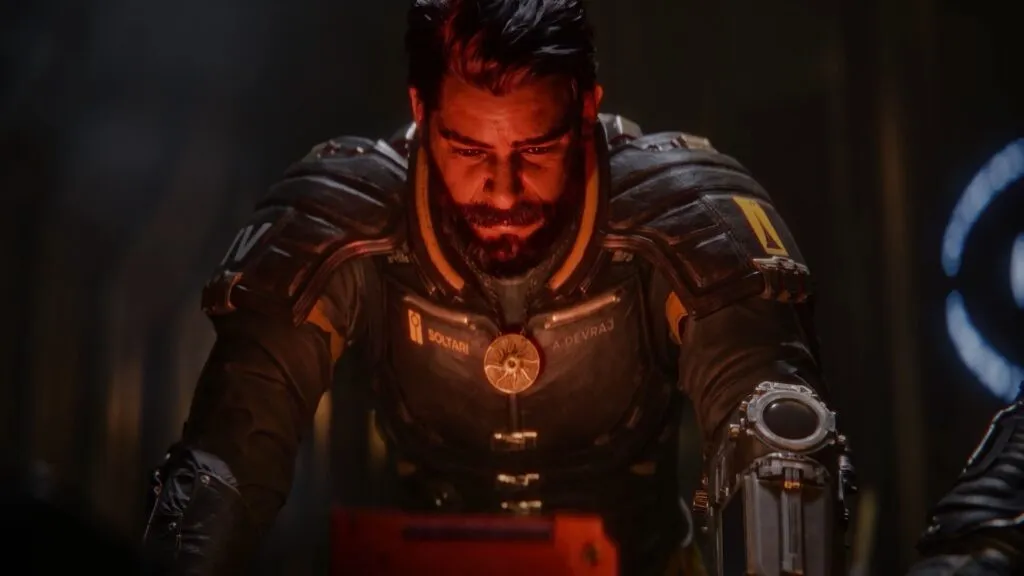
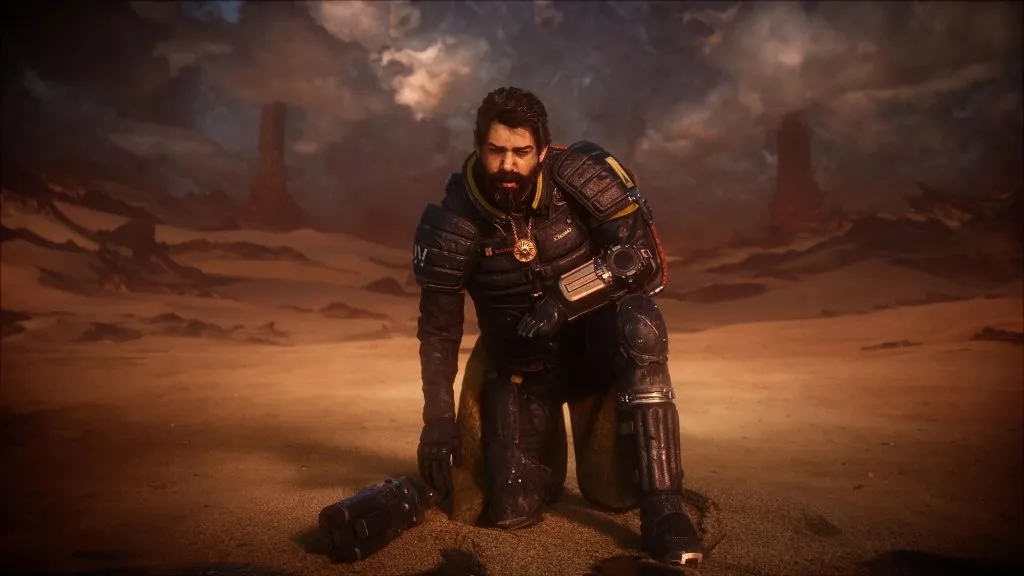
In other ways, Revelations really feels like id Software digging deep into the Slayer’s lore and expanding it further. Case in point: the confirmation of the Slayer’s real name from before the chaos on Mars, which reinforces his deep-seated guilt. It also loops back to Daisy, his pet rabbit, that kickstarted his vendetta against Hell. It’s a notable sideplot that brings things full circle for those who care.
The Chain Spear: A Joy to Wield
Of course, as with the previous games, the real reason you’re playing Revelations is the combat—the extensive slaying of foes in extravagantly gory ways, fighting to the brink of death and executing some poor fool, their life essence fueling your path of destruction. The expansion doesn’t bring any new guns; everything from The Dark Ages is here and pretty much fully upgraded (save for the Shield Saw, which returns a few hours in but lacks its Runes). The Chain Spear is the exception, and it’s easily one of the most fun additions to the game yet.
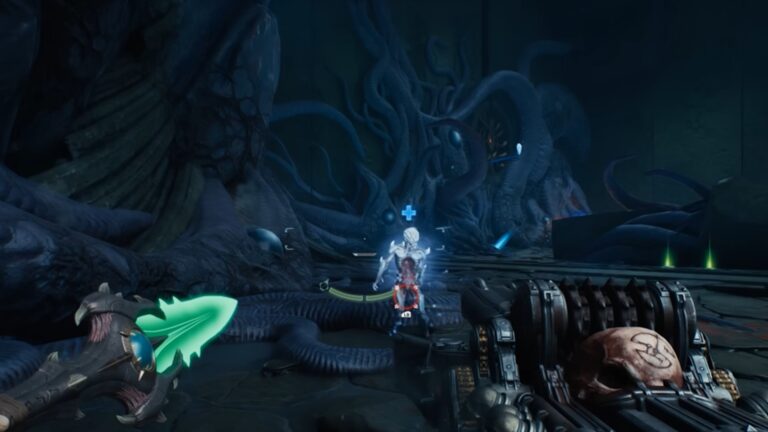
Beyond slicing through hordes of fodder like it’s nothing, the Chain Spear can latch onto any target like the Super Shotgun’s Meat Hook in Eternal and let you swing around. Pick up a few upgrades, and you can execute clean orbits with increased hangtime, burning enemies and gaining bits of armor in the process. Empowerment is the new hotness—parrying green projectiles and executing enemies enables charges for the Spear, unlocking abilities like Stab, Slam, and turning it into a javelin to lodge in some poor sod’s head. All of these have upgrades in turn, from Stab breaking superheated armor to Slam generating health orbs.
Of course, the Chain Spear can feel awkward at first. Your swing is the parry, with timing slightly different from the Shield Saw. Furthermore, the Meat Hook is prepped by holding down the right mouse button and then releasing it. Couple that with holding it down again mid-flight to orbit, and it takes practice to unlearn what The Dark Ages taught you. The lack of early upgrades, especially the means to maintain Empowerment consistently, can also make the transition challenging.
New Enemies, New Frustrations
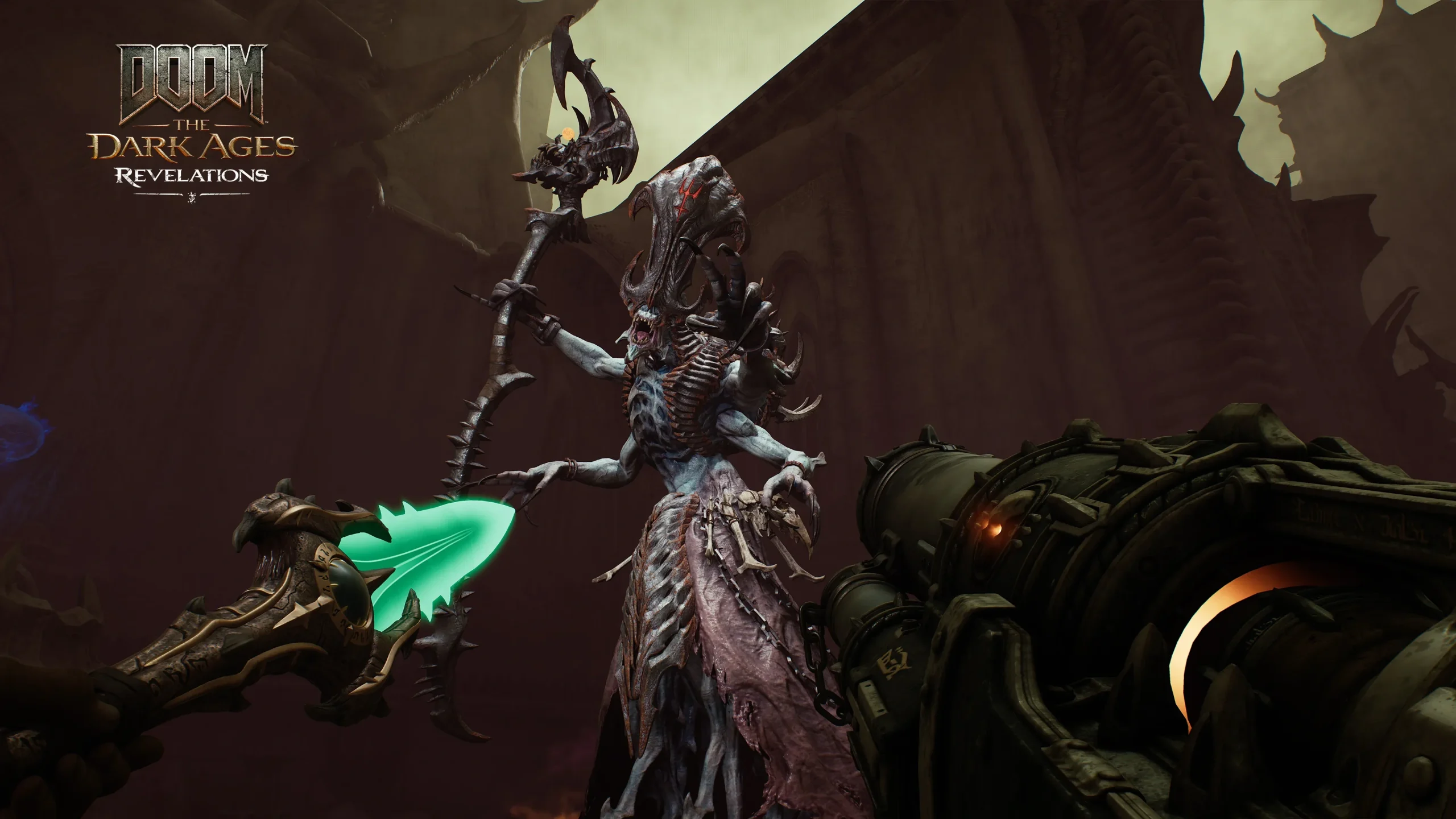
It doesn’t help that the returning Archvile is one of the more annoying enemy types—generating shields, dishing out projectiles in every direction, endlessly summoning minions, and teleporting all over the place. On Ultra-Violence, it proved a difficult affair simply by virtue of how much damage it could deal. The fact that it doesn’t shoot any green projectiles—forcing you to channel Empowerment from everything else in the arena—makes it trickier. By comparison, the Warlocks feel more “fair,” empowering existing enemies but remaining relatively easy to locate and lock down.
When It Clicks, It Sings
When you unlock more upgrades and find a rhythm with the Chain Spear, it sings like few others. Hooking onto an enemy, sailing across the room while overloading them with bone fragments before executing them; dodging green melee attacks from a Hunter to poke them with Stabs; and best of all, flying up into the air before slamming down with authority—all of this feels immensely satisfying. Even fighting the new Buzzsaw can be fun, weaving between its projectiles, getting in close to bait melee attacks while slowly overheating its shield. When you’ve cleared a room of threats, adrenaline coursing, it’s difficult not to stop and shout “Are you not entertained?!” to no one in particular.
One complaint: swinging with the Meat Hook can get awkward when pillars or walls are in the way, resulting in the Slayer moving while still in place until you tap in the other direction. It’s more hilarious than problematic, but it can throw you off.
Level Design: A Compelling March Forward
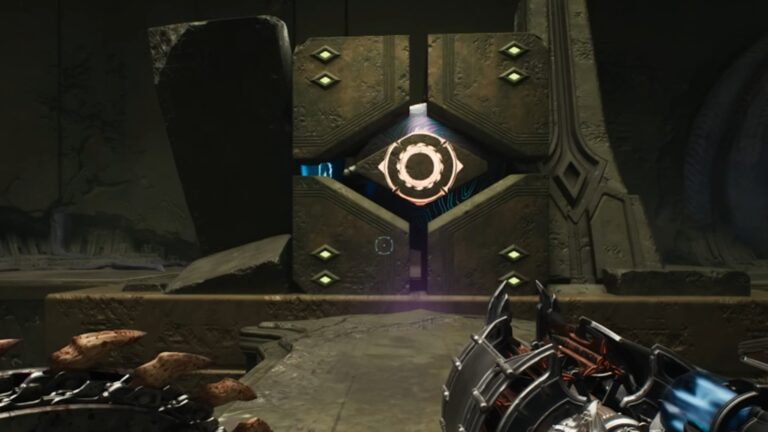
The other big appeal is level design. While the jury’s out on whether Revelations represents the genre’s best work, I traversed these environments without stopping, eagerly anticipating what came next. Beyond the big arena fights, there are some interesting puzzles—particularly those requiring embedding the Shield Saw to create a platform while using the Chain Spear to pull walkways. The forboding walls of Chasm of Xal’Goroth stood out; Osseus felt weaker by comparison, its giant-bone decorations feeling a little too ancillary.
Endgame: More Than Just a Victory Lap
Once you finish the campaign (and its admittedly sick boss fights), the end-game opens up. I was initially skeptical, but leave it to id Software to know what they’re doing. New pathways open up in existing levels, housing new activities like Rituals of Power, where completing objectives as fast as possible nets different medals. Gold rewards a piece of the Astral Key, necessary to face tougher foes; Silver awards Blood Iron for final upgrades. I like these because they’re as much about plotting optimal routes as saving time in slaying—that satisfying Glory Kill might cost precious seconds here.
The end-game offers more when you restore the Runes on the Shield Saw and unlock abilities that encourage switching between it and the Chain Spear. Or exploring Chasm and Osseus, unearthing secrets, or challenging difficult areas. Yet even with so much to do, there’s rarely any fluff or uninteresting moments—aside from possibly traversing old pathways to clean up collectibles.
Verdict
Revelations isn’t what DOOM: The Dark Ages should have been at launch. Instead, it shines on its own, delivering a compelling—if once again straightforward—experience and an excellent new tool in the Chain Spear, which in turn benefits from tense encounters against various foes. Throw in id Software’s incredible tech prowess, combined with a strong soundtrack (which I found better than the base game), and this is more than a simple add-on. It’s a standalone experience worthwhile for almost any fan, and one that should stand as a testament to the genre’s legacy.
Related posts:
 Yoshi and the Mysterious Book Review – Delightful, Dazzling, and Surprisingly Deep
 Star Fox Review – A Stunning, Faithful Revival That Soars Above Expectations
 EA Sports UFC 6 Review – Burning Bright in Every Fight, But Not Quite a Knockout
 NBA: The Run Review – Nothing But Net, With a Few Bricks Along the Way
 Dead or Alive 6 Last Round Review – One Fight at a Time, But Maybe Not Online
 The Mound: Omen of Cthulhu Review – Welcome to the Jungle, Where Nothing Quite Works as Intended
 Riven Remake PS5 Review – To the Rescue, but Not Without Its Wrinkles
 Echoes of Aincrad Review – An SAO opportunity not taken