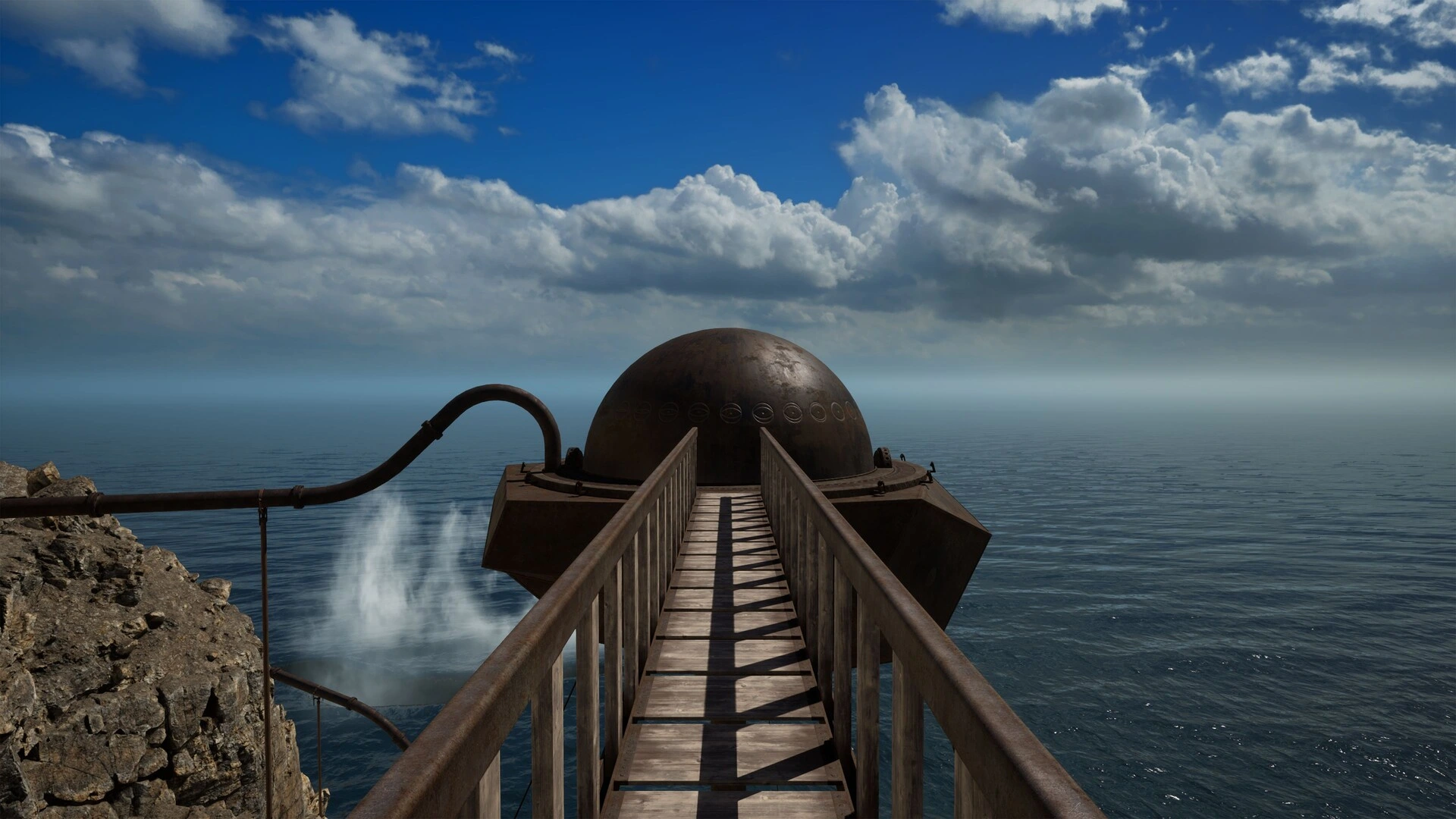

It’s been largely fun engaging with Cyan Worlds’s opaque environments in the latest iteration of Riven, which brings visual upgrades to a formula that honestly nails the best of what a point-and-click adventure should be. The follow-up to Myst builds on the original game’s ambition, making it a sequel that’s bigger—but is it better?
I’d say the answer is more nuanced than a binary yes or no. Riven has limitations that hold it back from overtaking its predecessor. You’re probably wondering how I dare to say that about a game that’s remained relevant for almost three decades, but stay with me. Let’s start with what’s good.
A Captivating Narrative
The story in Riven is a captivating journey to the Fifth Age, taking place in the titular world where Catherine—wife of Atrus from the first game—has been trapped in a decaying Age by Gehn, Atrus’s father. That’s an interesting twist on Myst‘s narrative, where you rescue Atrus from his sons. The man has a messed-up family tree, and it’s up to you to restore a semblance of normalcy to it.
Easier said than done. Gehn is a devious antagonist just waiting for Atrus to step into Riven with a Linking Book, allowing him to escape and leave the Age to its fate. He’s been effecting changes that have resulted in the Age’s gradual decay, and Atrus can only watch from afar, rife with worry for his beloved spouse.
That all changes when you show up. Atrus pins his hopes firmly on you, sending you to Riven without a Linking Book—meaning you have no way out until you find Catherine, restrain Gehn, and send a signal to Atrus to rescue you both. Things don’t go according to plan, of course. There are multiple outcomes depending on your actions, adding narrative depth and boosting replay value.
A More Elaborate World
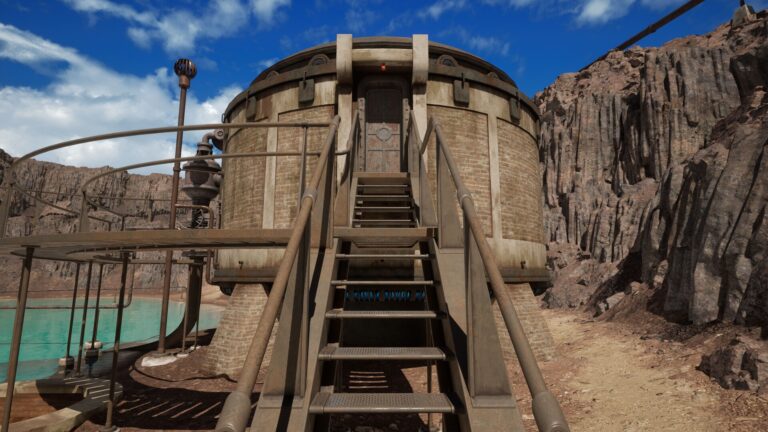
Your adventure begins with you being imprisoned on arrival by a stranger who doesn’t speak your language. You’re rescued by a mysterious Assassin who promptly falls off a cliff to their death while escaping. From there, it’s business as usual: you’re left to your own devices, navigating Riven’s many islands, each with complex mechanisms to figure out. There’s no central hub like the library on Myst Island, and you’ll be flitting between regions as you uncover more of what makes Riven tick.
Where Myst‘s puzzles and environments were hard enough to crack, Riven takes things up a notch—elaborate structures with interconnected rooms and mechanisms that can have you running in circles for hours if this is your first time. I’m no slouch when it comes to puzzles, but Riven reminds me of a time when video games needed you to have a guide or walkthrough handy.
It’s deliciously mysterious, and the visual overhaul does well to bring Riven to life in a way only current-gen systems can manage. Just like Myst, solutions to obstacles aren’t made evident in the slightest. But unlike Myst, they’re so elaborate that Riven‘s ambitions are visible in every intricate mechanism you operate.
Ambition Meets Frustration
Those ambitions, however, are a mixed bag. They make Riven feel miles ahead of Myst in scale, giving us an Age that progresses fairly linearly—though you can double back to uncover more secrets or lore. But they also risk making the game interesting until frustration sets in and players drop off.
You could say Myst carried the same risk, but its puzzles seem simple in comparison. With a similar lack of hand-holding, Riven might ask for more than the average player can give. I can see many hopping in to see what the fuss is about, and quickly falling back when the island refuses to cooperate with their search for Gehn and Catherine.
For those who stick with it, however, wonders await—each conveying the immense power that Atrus and Gehn command. The adventure holds your attention and piques your curiosity just enough to keep you coming back to bang your head against whatever structure the island has thrown at you.

The Lack of Danger
Another complaint I’ve had with both Riven and its predecessor is the lack of any challenge outside the puzzles. I’ll concede that the point-and-click format may not work well with combat, but I would have appreciated some semblance of danger. The sight of dangerous-looking creatures lounging on a beach in the early sections gave me hope—only for them to give me a passing glance before settling back into their cozy nap.
Verdict: A Classic, But for a Niche Audience
Nevertheless, Riven remains a unique experience all these years later, carrying the torch that Myst lit before it quite well. But is that enough to make it a must-play today? That depends on what you’re looking for. Excitement and danger in a fantasy world? This isn’t for you. A sense of awe and wonder with solid replay value? You’re going to have many entertaining hours with this one.
On the whole, Riven and the Myst franchise are a dose of nostalgia that might work for hardcore fans and a handful of newcomers with rare tastes. For the rest of the gaming community, there probably isn’t enough meat here to make the average player give it the time it needs to unfold into the great title it is. That’s a pity, but it’s also a sign that times have changed since Riven first hit shelves.
Would I recommend picking this up at full price? Honestly, unless you’re the type of player who likes their games to maintain a stony silence, you’re better off waiting for a sale. Make no mistake, it’s still worth checking out—even cheesing with a detailed walkthrough. The only variable is you, and how likely you are to play this one as intended and have a good time doing so.
Riven continues to be a classic, and this iteration is the definitive way to play it for those looking for a bit of brain pain.
Related posts:
 Star Fox Review – A Stunning, Faithful Revival That Soars Above Expectations
 Brokenlore: FOLLOW Review – Growing Up Too Fast, Haunted Forever
 Final Fantasy 7 Rebirth Xbox Series X Review – Expected Excellence, Delivered in Full
 F1 25: 2026 Season Pack Review – Evolution Over Revolution, But Worth the Upgrade
 The Mound: Omen of Cthulhu Review – Welcome to the Jungle, Where Nothing Quite Works as Intended
 Echoes of Aincrad Review – An SAO opportunity not taken
 NBA: The Run Review – Nothing But Net, With a Few Bricks Along the Way
 The Alters: Last Variable Review – The Science of Self-Discovery