
Nintendo deserves a lot of credit for never quite letting their major IP fall by the wayside. Over time, any IP they have is fair game for a brand new release. Which is how, in the year 2026, we find ourselves with a new Star Fox release as a headlining game for the Switch 2. Ten years after the catastrophic last entry, no one expected the IP to ever show signs of life—and yet, here it is, back in style, the missteps and fumbles of Star Fox Zero firmly in the rear-view mirror.
“Brand new” is a bit of a misleading adjective for this release. You see, in an attempt to wipe the board clean of the decades of baggage from poorly conceived experiments and entries that never quite resonated with the market, the new Star Fox is pitched as a reboot of the series. And in an attempt to be a reboot, it goes back to the beginning—Star Fox 64, the series’ high watermark, which represents the “first” entry in the chronology (itself a retelling of the SNES Star Fox game).
A Story Worth Retelling
Star Fox on the Nintendo Switch 2, then, is a remake of Star Fox 64 (and in turn, Star Fox on the SNES). Counting Star Fox 64 3D—an earlier remake for the 3DS—and Star Fox Zero on the Wii U—a retelling of the same story in a new continuity—this represents the fifth time this story has been told by Nintendo in a major game.
But honestly, it works. The story of Star Fox 64 is straightforward but allows for a lot of great and frenetic arcade action. It has some fantastic character moments, iconic lines, and enough lore to keep players busy trying to uncover it all.
Arcade Roots, Modern Sensibilities
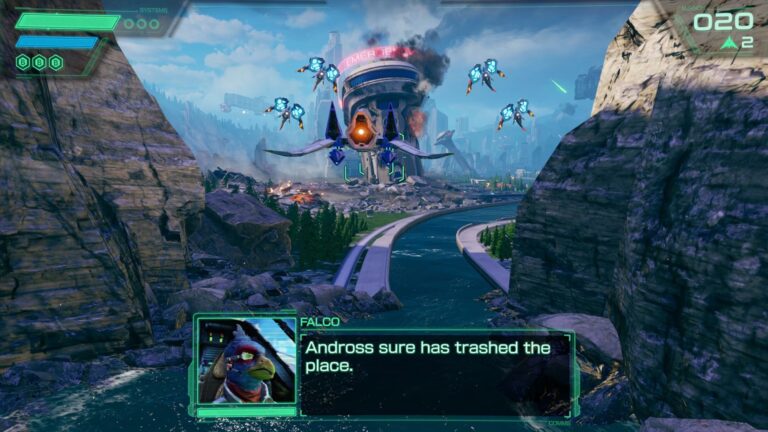
Ultimately, no one plays Star Fox for the story. Barely anyone is even playing for straightforward “completion,” in fact. You see, Star Fox is an arcade game. I don’t mean that in the way the adjective is used today—I mean it is literally an arcade game, designed with the sensibilities of a game played at a physical arcade. The game, a rail shooter, sees players running quick levels, with the goal being not completion but maximizing your score.
The game and each level are designed around being replayed. There are secret routes through many levels, for example, which can unlock new paths through the campaign in the form of alternate levels and routes. There are sub-objectives and secrets to find, usually reserved for players who have a thorough mastery of the level—mastery that comes, mind you, by replaying those levels repeatedly until you know what enemies, hazards, and impediments to expect, when, where, and how.
Running through Star Fox start to finish once takes very little time—probably 2-3 hours for most players—but the game is designed around that not being the point. Instead, players continue to play and replay levels. It works well and lends itself remarkably to the Switch’s pick-up-and-play nature while also allowing for hectic, frenetic longer sessions.
Visuals That Set a New Standard
As a remake of Star Fox 64, Star Fox on the Nintendo Switch 2 is extremely faithful—the changes are all visual and storytelling-related. The actual layout of each level, its structure, encounters, and progression, is pretty much the same as it was in the N64 game. Those visual changes, however, are comprehensive. The game looks nothing like the 64-bit skeleton it’s built on.
Developed by Velan Studios on their in-house VIPER Engine, there’s a convincing case to be made that Star Fox is the best-looking game on the Nintendo Switch 2 so far. In terms of the rendering technologies underlying it—from the lighting, the physics-based rendering pipeline, the asset streaming, and the number of stunning transparencies and alpha effects—this is decidedly the most modern a Nintendo game has looked.
Most of Nintendo’s games have looked great on the Switch 2, but every single one of them is based on tech and rendering stacks that started on the original Nintendo Switch, using strong art style to compensate. Star Fox is the first time on the Switch 2 that a Nintendo game looks visually a generation apart from what Nintendo was doing on the original Switch.
Redesigns: Controversial but Effective
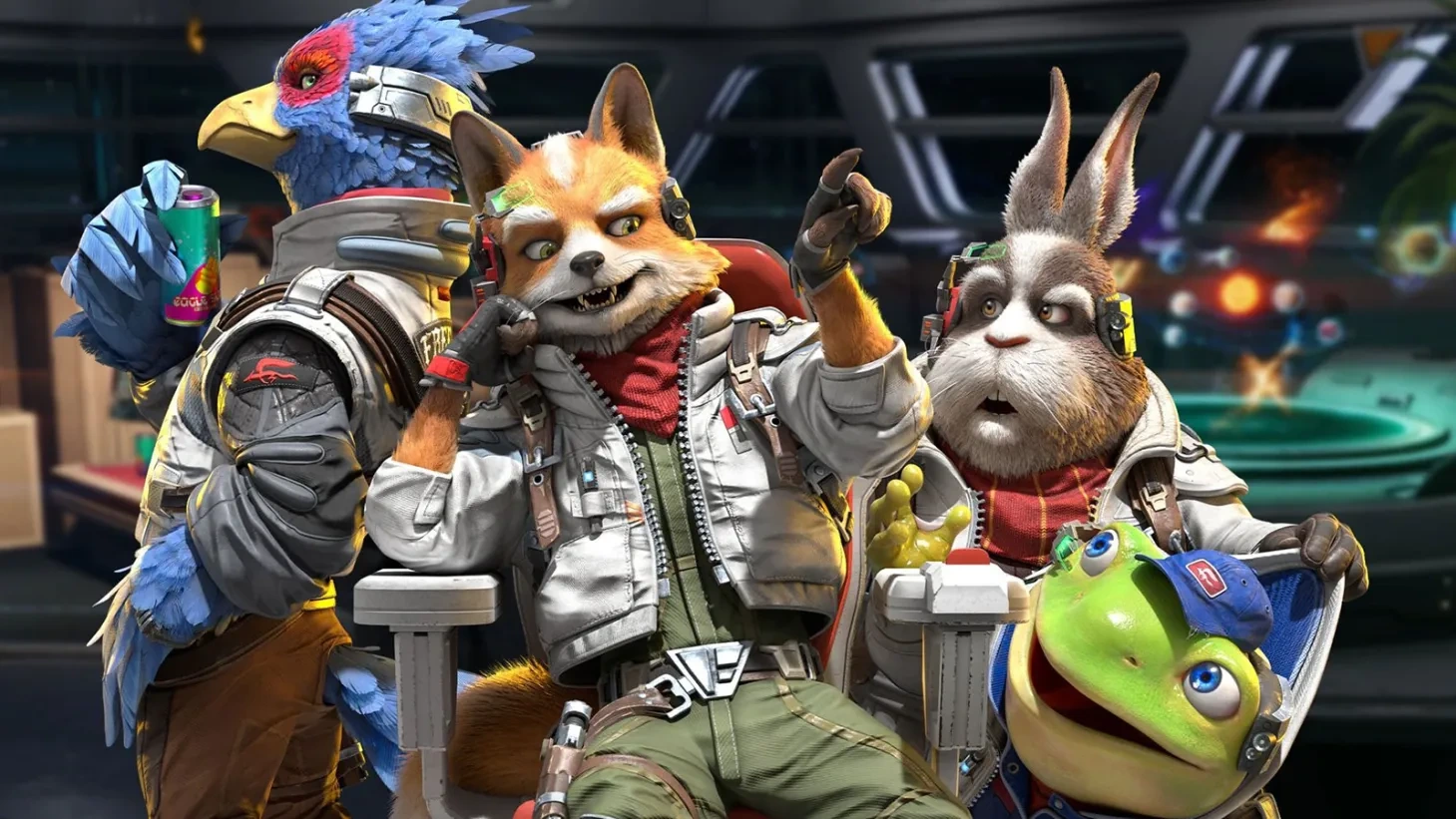
A lot has been said about the art style this remake uses. The extremely photorealistic look was initially divisive—while the environments look gorgeous, the interpretation of the classic and beloved Star Fox cast as realistic-looking animals was a big enough departure from the expected aesthetic that there was pushback when the game was originally revealed.
Personally, I was never attached enough to the original character designs to be against a redesign, and the redesign itself—while not necessarily better than the classic designs—is still good enough and fits the game’s overall look. Once you’re actually playing, your screen filled with explosions and particle effects as you try to save the Lylat System from Andross’s evil machinations, those redesigns cease to even register.
Expanded Storytelling
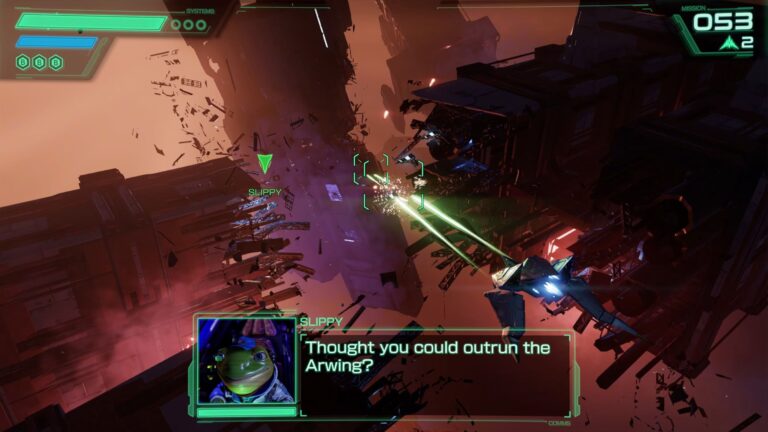
Other than the graphics, the other big change over the original game is the expanded storytelling. Yes, really—the cutscenes and storytelling are a major part of the pitch for this game, and they’re actually really good. Expanding on the CODEC-style conversations of the original game, these cutscenes are now fully animated and fully voiced, expanding not just the story but also some of the lore and backstory, and perhaps best of all for fans, the inter-team dynamics of the various Star Fox members.
Getting, for example, an opportunity to see more banter between Fox and Falco is excellent—exactly the sort of thing that long-time fans will appreciate, while doing a great job at endearing these characters to potential new fans. The cutscenes are impressive: not only are they fully voiced in every language the game supports, but they also adjust to reflect your path through the story. If one of your team members was downed in a mission and isn’t available for the upcoming one, the cutscenes reflect that. This sort of reactivity is nice to see Star Fox retain while expanding on the storytelling.
Value Proposition
A big concern people may have is the content-to-cost ratio. It’s far too easy to see the “game can be beaten in 3 hours” number and be scared off. If you’re only going to play through once and move on, you probably shouldn’t buy Star Fox—it won’t be worth the price.
But for everyone else, Star Fox more than justifies the cost. The amount of value across all the replays of a campaign, secret and alternate paths, sub-objectives, the new achievements system, the brand-new multiplayer mode (which supports online and voice chat—not a given for a new Nintendo game, sadly), the new cutscenes, new gimmicks such as support for mouse mode, and its overall high production value make it worth it. The game is also very competitively priced, which helps.
Verdict
While another remake of Star Fox 64 may seem unnecessary, Star Fox on the Nintendo Switch 2 gets a lot of mileage out of the premise. Between the improvements to controls, UI, QoL, storytelling, the new multiplayer mode, and of course the graphics, this is decidedly the definitive edition of this classic tale.
Now let’s hope this represents a true new beginning and a new era for the franchise. If future Star Fox games on the Switch 2 end up being as well done as this one is, fans—both veterans and newcomers alike—are in for a treat.
Related posts:
 Dead or Alive 6 Last Round Review – One Fight at a Time, But Maybe Not Online
 The Mound: Omen of Cthulhu Review – Welcome to the Jungle, Where Nothing Quite Works as Intended
 DOOM: The Dark Ages – Revelations Review – Only You Can Rip and Tear This Well
 Gothic 1 Remake Review – Flaws and All, a Brutal Return to the Colony
 Riven Remake PS5 Review – To the Rescue, but Not Without Its Wrinkles
 EA Sports UFC 6 Review – Burning Bright in Every Fight, But Not Quite a Knockout
 Myst Remake PS5 Review – Light Reading, Heavy Thinking
 Brokenlore: FOLLOW Review – Growing Up Too Fast, Haunted Forever