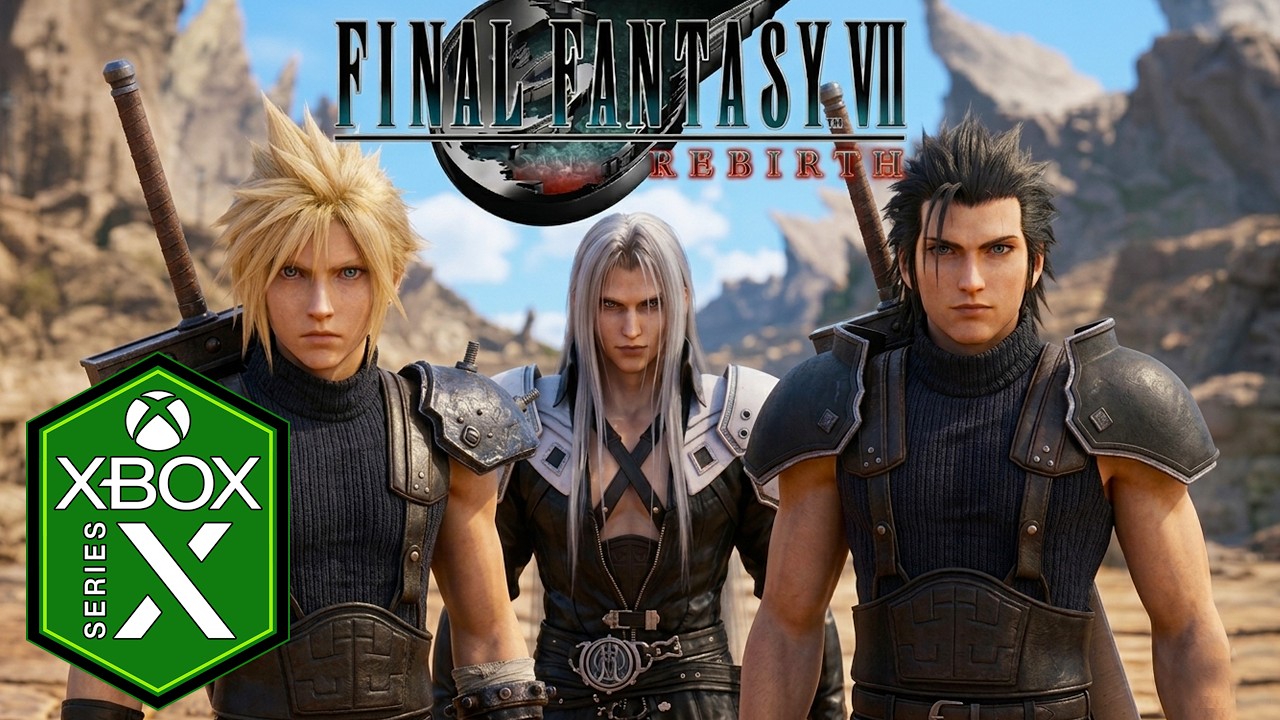

Well, folks, it’s finally here. I’ve waited a long time to say it, but Final Fantasy 7 Rebirth is finally available on Xbox Series X. I’ve always taken issue with the fact that this one wasn’t accessible to an entire section of the gaming world—especially given that it’s one of the biggest RPGs of this generation, with ambitions that soar high and an experience that backs them up quite well. Yes, it’s been around for a while, but I can safely say time hasn’t dulled its edge in the slightest.
Rebirth continues to be a confident, emotionally charged Final Fantasy title, and it’s easy to see why it’s among the franchise’s top earners. Let’s begin with the story, which feels familiar but not entirely predictable. It sustains the challenge of balancing old and new that Remake began, taking time to honor iconic characters, places, and emotional beats without being a scene-by-scene recreation of the original.
A Story That Toys With Expectations
It constantly toys with your expectations, leaving enough for longtime fans to recognize while remaining cryptic about where things are headed. That’s not an easy feat, but this one does it with style. I do think you’d have a better time making sense of it all if you play Remake Intergrade, but there’s enough on offer here to make it stand on its own two feet. It brings a sublime blend of mystery, momentum, and sheer scale that makes it quite hard to put down—even on a replay.
Of course, the people you meet along the way are a huge part of Rebirth‘s allure. Cloud, Aerith, Barret, Tifa, and the rest of the cast are brought to life in ways that differentiate them from their original appearances. There’s a lot of new dialogue between characters, injecting them with more personality through additional lines of banter as you make your way across a gorgeous map.
They’re more vulnerable and willing to lean on their comrades when conviction falters, and some of the game’s best moments leave the spectacle behind for quieter, more meaningful interactions that add emotional weight to the party’s dynamics. That makes the entire adventure feel like an insightful look into their motivations, and it’s a welcome expansion of the original. They feel like a traveling group of comrades now more than ever—and that’s a very good thing in any RPG.
Spectacle and Substance
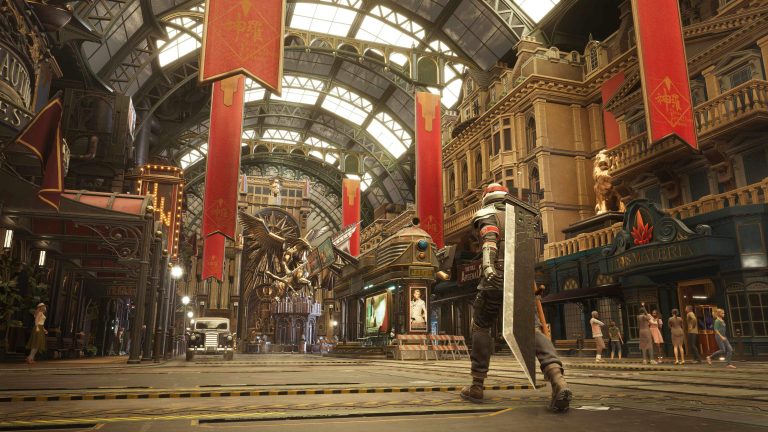
That isn’t to say there isn’t any spectacle on offer. It wouldn’t be a Final Fantasy game without it. This is a massive game, but it consistently brings new ideas and mechanics to keep you entertained for the entire experience. You could spend a quiet moment relishing an emotional story beat before being whisked away into a massive set-piece that has your heart flitting between empathy and exhilaration.
It brings incredibly designed boss fights, addictive minigames, and a LOT of detours as you explore the open world—all of which serve character-driven moments very well. It’s rare that an RPG packs so much into its runtime, giving us an adventure that actually feels like we’re on a mission across a vast world, our only comfort being those who choose to travel by our side against forces that seem overwhelming. It’s deliciously old-school but with a layer of modern production values that make it a very potent blockbuster.
A World That Invites Exploration
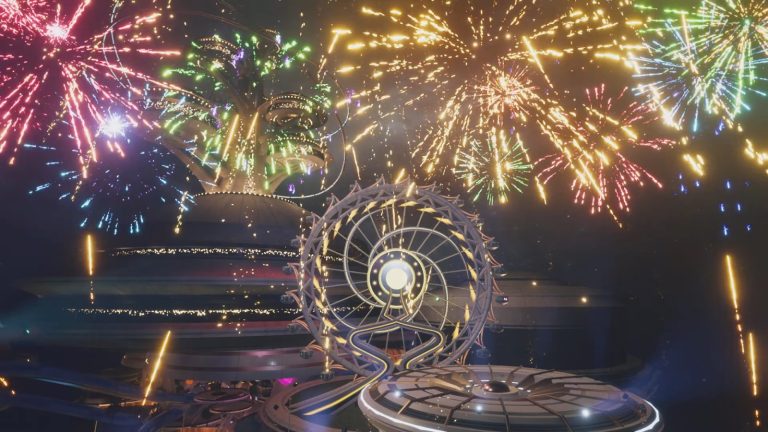
The revamped approach to world design helps with that, moving away from Remake‘s linear structure to more open regions that feel distinct in their identity while providing visual splendor that continues to have me stopping to admire the sights—even after several playthroughs. From the Grasslands to Costa del Sol to the Gold Saucer, each environment has its own identity, made possible by unique side activities, traversal quirks, and atmospheric touches.
It’s a world that feels like there was a lot of intent behind it, lovingly crafted rather than mechanically built to fill vast swathes of land with things to do. That brings me to the nearly overwhelming amount of side content, most of which is purposefully baked into the experience to either expand your knowledge of the world, deepen bonds between your crew, or reward curiosity while feeding progression.
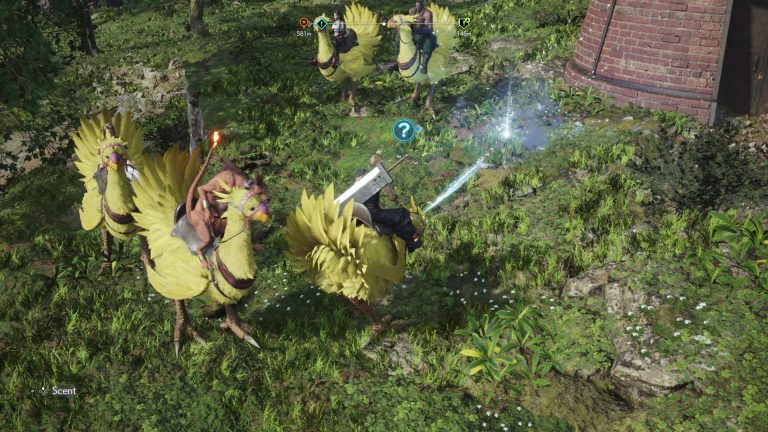
All of that makes for a gameplay loop that’s quite hard to put down. Start a playthrough, and you’re going to be thinking about it even when you’re away from your console. The activities you take on will depend on your personal tastes, but you’re sure to find something to like—whether it’s hunting down intel about the world, the Protorelic questlines, chocobo activities, or all the things you can do in the Gold Saucer. This one’s dense as they come, and generous enough to make the RPG side feel very rewarding.
Combat: The Conductor’s Masterpiece
That’s because this isn’t just an action game with a bit of customization thrown in. Instead, it’s an RPG through and through, with mechanics that feed into the options at your disposal to create synergies between party members. You’ve got Materia, weapon upgrades, Folios, crafting, transmutation, a great gear system, and a lot of build potential to decide how your party operates under enemy fire. If you enjoy finding unique ways to take advantage of well-crafted systems, this one will keep you occupied for a while.
All that energy you spend creating the perfect party setup feeds into the combat system—easily my favorite part of the entire game. It builds on the hybrid between action and the ATB system from Remake, with more playable characters bringing a wider range of tactical options. Combat encounters are similarly flexible, letting you take varying approaches to problem-solving on the fly.
Your party members’ abilities synergize well once you sink time into enabling such interactions, and with options like character switching, stagger bar management, blocking, and dodging based on enemy attacks forming the crux of your basic toolkit, that’s already a lot to wrap your head around. Throw in Limit Breaks, Synergy Abilities, Summons, and Materia combinations, and you have a combat system that feels like you’re the conductor of a very talented opera—one that sustains a spellbinding performance on the grand stage.
It all comes together so beautifully that you can’t help but marvel at it all. Between the story, combat, and all the world has to offer, Rebirth delivers the best combat in the series while framing it within a narrative and exploratory loop that makes it stand out instead of diminishing it. Everything you do feeds back into an important layer of the experience, making you fall in love with it.
Xbox Series X Performance
The Xbox Series X port offers three graphics modes: a Graphics mode that pushes maximum visual fidelity at 4K resolution, and two performance modes—one sharpening the image, the other smoothing it out. All modes performed well against their targets, but we preferred the Graphics mode, where the game shines brightest thanks to overall high-quality visuals and assets.
Verdict: A Triumph
With all that’s been said—and not for the first time—you’ve probably already guessed that Final Fantasy 7 Rebirth is a superb RPG and a very welcome addition to any Xbox library. It brings a bold story, a memorable cast, a world that won’t let you remain idle for too long, and outstanding combat—all woven together so seamlessly that it stands among the most impressive titles in years.
Yes, flaws exist—a bit of stiffness in traversal mechanics, some slightly exaggerated story moments—but they’re largely ignorable in the face of an experience that does everything else so darn well. If you’ve got an Xbox, know that this isn’t a compromised late arrival, but a strong offering in the platform’s RPG space—and a title that’s very easy to recommend wholeheartedly.
It aims for the clouds, with little strife to be found on the gameplay front (pun intended), and it’s been a pleasure to return to it once again.
Related posts:
 Backyard Baseball Review – High-Contact Nostalgia With a Few Swing-and-Misses
 The Alters: Last Variable Review – The Science of Self-Discovery
 EA Sports College Football 27 Review – The Other Football, But Not Quite a Game-Changer
 Echoes of Aincrad Review – An SAO opportunity not taken
 EA Sports UFC 6 Review – Burning Bright in Every Fight, But Not Quite a Knockout
 #DRIVE Rally PS5 Review – Racing to Forget, but Hard to Remember
 Dead or Alive 6 Last Round Review – One Fight at a Time, But Maybe Not Online
 Riven Remake PS5 Review – To the Rescue, but Not Without Its Wrinkles